Which DC axial fan should I use for industrial ventilation?
Table of Contents
Industrial Ventilation Systems: Choosing the Right DC Axial Fan
Industrial ventilation systems require precise airflow solutions, and selecting the right DC axial fan is critical to achieving optimal ventilation. Factors like airflow requirements, energy efficiency, noise levels, and durability should guide your decision. CCHV offers a range of DC axial fans specifically designed for industrial use, ensuring reliability and performance.
What is a DC Axial Fan?
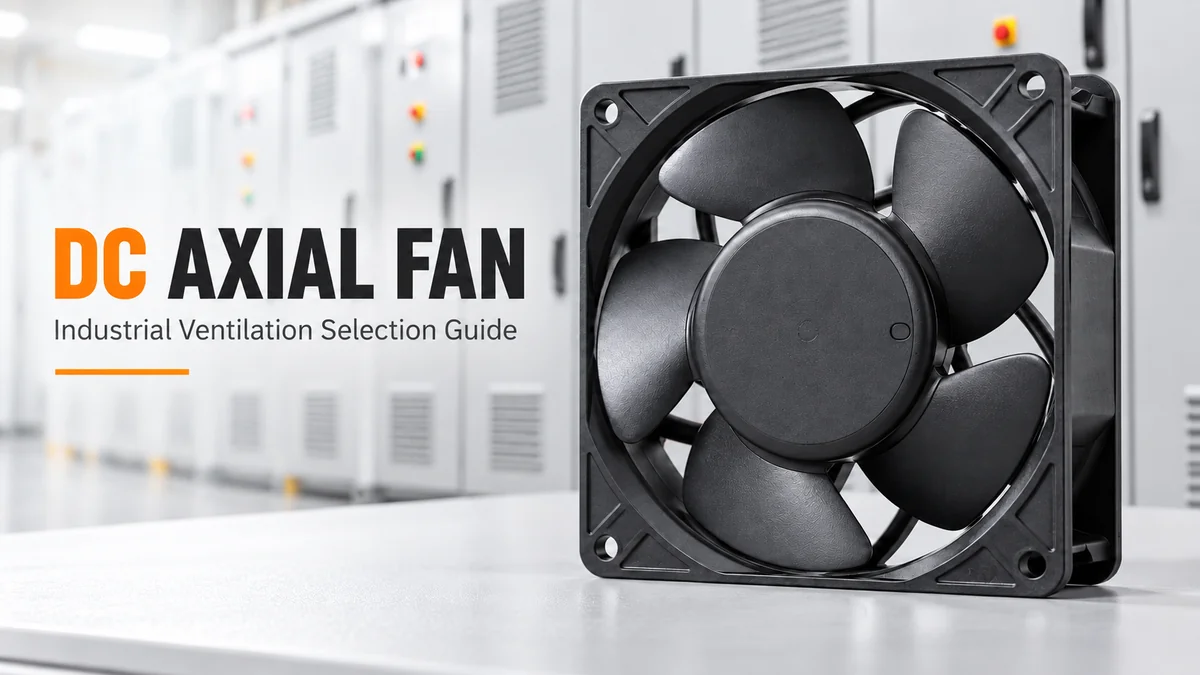
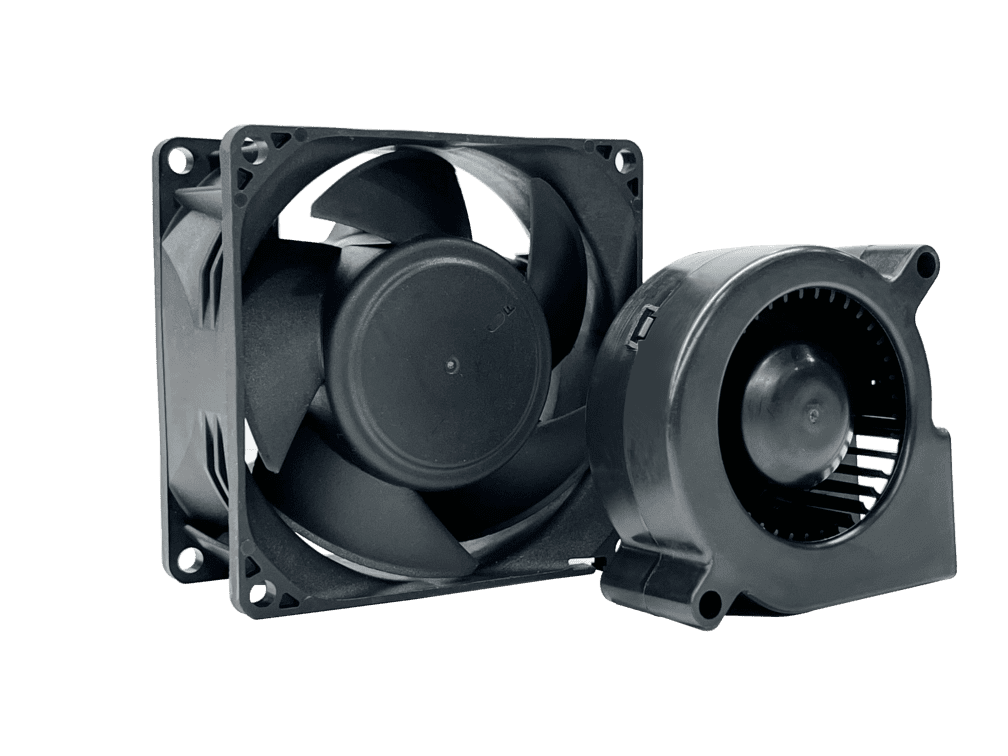
DC axial fans are electromechanical devices designed to move air along an axis using direct current (DC) power, commonly used in industrial, HVAC, and electronic cooling applications.
DC axial fans consist of a motor, fan blades, and a housing unit. Unlike AC axial fans, they operate on DC power, making them energy-efficient and suitable for applications requiring precise control.
Based on our internal data and market analysis, here is the breakdown of typical DC axial fan characteristics:
Industrial ventilation, electronics cooling, HVAC, and automotive systems.
CCHV Pro Tip: Always match the fan’s airflow capacity (CFM) to your system’s ventilation requirements to avoid underperformance or inefficiency.
How Does a DC Axial Fan Work?
A DC axial fan works by using a DC-powered motor to rotate fan blades, creating airflow parallel to the axis of rotation, which is ideal for cooling and ventilation in confined spaces.
The motor converts electrical energy into mechanical energy, driving the fan blades. The blades’ specific design ensures air is drawn from one side and expelled on the other, promoting consistent airflow.
Key Operational Components:
DC Motor: Provides energy-efficient operation with lower heat loss.
Blades: Designed for optimal aerodynamic performance.
Frame/Housing: Protects the internal components and directs airflow.
Controller: Enables precise speed control via voltage or PWM.
CCHV Pro Tip: For industrial setups, prioritize fans with advanced controllers for accurate speed adjustments and reduced power consumption.
What are the Benefits of DC Axial Fans?
DC axial fans offer superior energy efficiency, reduced noise levels, and precise speed control, making them ideal for industrial ventilation and cooling applications.
Advantages:
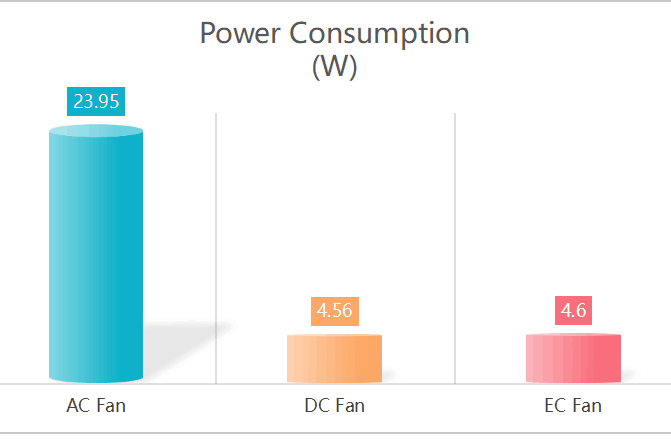
Energy Efficiency: Operates with lower power consumption compared to AC fans.
Compact Design: Suitable for confined spaces without compromising performance.
Noise Reduction: Designed to minimize operational noise for industrial settings.
Enhanced Longevity: Robust construction ensures durability under continuous operation.
CCHV Pro Tip: Opt for DC axial fans with ball bearings for extended lifespan in harsh environments.
How to Maintain a DC Axial Fan?
Regular maintenance of DC axial fans includes cleaning, lubrication, and inspection of electrical connections to ensure optimal performance and longevity.
Maintenance Steps:
Clean the Blades: Remove dust and debris to maintain airflow efficiency.
Inspect Bearings: Ensure smooth rotation and replace worn-out bearings.
Check Electrical Connections: Verify wiring integrity and secure connections.
Lubricate Moving Parts: Reduce friction and prevent premature wear and tear.
CCHV Pro Tip: Schedule quarterly maintenance checks to identify potential issues early and avoid costly repairs.
Key Features & Comparison
The right DC axial fan depends on the airflow your system needs, the resistance it must overcome, and your power and noise limits. The following examples from CCHV’s catalogue help you compare options for industrial equipment ventilation.
Specification
12025 F Series — 24V, 2,500 RPM
12038 F Series — 24V, 5,500 RPM
12038 F Series — 24V, 7,500 RPM
Catalogue model designation*
CH(a)12024(b)H-(c)25(d)
CH(a)12024(b)M-(c)38(d)
CH(a)12024(b)Y-(c)38(d)
Frame dimensions
119.2 × 119.2 × 25.6 mm
120 × 120 × 38 mm
120 × 120 × 38 mm
Rated voltage
24 VDC
24 VDC
24 VDC
Maximum airflow
73.55 CFM
162.20 CFM
221.20 CFM
Maximum static pressure
4.16 mmH₂O
38.90 mmH₂O
72.30 mmH₂O
Power consumption
2.16 W
9.60 W
24.48 W
Noise level
37.00 dB(A)
58.40 dB(A)
65.80 dB(A)
Bearing options listed
Dual ball / hydraulic
Dual ball
Dual ball
Speed control listed
Voltage / PWM
Voltage / PWM
Voltage / PWM
Signal outputs listed
Alarm / tachometer
Alarm / tachometer
Alarm / tachometer
Selection guidance
Consider when installation depth, power consumption, and noise are priorities
Consider when your system requires greater airflow and pressure capability
Consider when higher system resistance requires additional pressure capability
Not sure which fan fits your ventilation system? Share your airflow target, system resistance, installation dimensions, and supply voltage to get a CCHV fan recommendation tailored to your equipment.
Maximum airflow and maximum static pressure occur at different operating points. Your installed airflow will depend on system resistance from filters, grilles, ducts, and internal components. Compare the fan’s P–Q curve with your system requirements before selecting a model.
CCHV Pro Tip: Share your required airflow, estimated system resistance, available installation space, supply voltage, and noise limit so your fan recommendation matches your equipment’s operating conditions.
Cost & Buying Factors
When purchasing a DC axial fan, consider factors such as airflow requirements, energy efficiency, noise levels, and durability. Additionally, ensure the fan’s dimensions fit your system and verify its compatibility with your power source.
CCHV Pro Tip: Always purchase from reputable manufacturers like CCHV to guarantee quality and reliable support.
Conclusion
DC axial fans are an essential component of industrial ventilation, offering energy-efficient and reliable airflow solutions. By considering factors like airflow capacity, noise level, and durability, you can select the best fan for your needs. Explore CCHV’s range of high-performance DC axial fans to ensure your ventilation system operates at peak efficiency.
Hey, I’m Annie Chan, the author of this post and also the account manager of CCHV.
I have been worked in DC fans field with 10+ years. Most of customers I serve all give me high praise to my work, especially fast reply, professional knowledges, ect..
In the past 10+ years, we have helped 32 countries and 400+ Clients like home applicance, car headlamp, power supply, commercial lighting, ect.. The purpose of this article is to share with the knowledge related to DC fans for optimizing your thermal solutions.